Rawness Grow Ibiza
The Private Culinary Gardeners
Rawness works at the intersection of horticulture, landscape design and gastronomy.
We are not landscapers who occasionally add an edible garden, nor commercial farmers growing at a distance from the people who eventually eat the harvest. We work inside the private estate, where land, kitchen and daily life can function as one continuous culinary system.
Our role is that of the Private Culinary Gardener: to understand the biological complexity of the landscape at the same resolution that a serious kitchen understands ingredients. Soil, water, cultivar, microclimate, succession, ripeness and season are not separate concerns. Together, they determine what the land can produce, when it should be harvested and what ultimately reaches the plate.
Rawness carries that complexity through design, cultivation and continuous stewardship. The household does not need to manage the growing system. The experience remains remarkably simple: step outside and harvest what is ready.
The complexity stays with us. The immediacy belongs to you.
The Rawness Standard
A culinary landscape is only as compelling as the principles behind it. Rawness does not pursue production for production’s sake. We cultivate for flavour, useful diversity, maturity, seasonality and the particular capacity of each piece of land.
Genetic Breadth over Standardisation
A tomato is never just a tomato.
Rawness cultivates almost exclusively from open-pollinated heirloom and heritage varieties, exploring diversity not only between crops, but deep within them.
A single crop unfolds into distinct expressions of acidity, sweetness, texture, colour and aroma. Heritage figs ripen across staggered windows, each cultivar offering a different density and character. Chillies, melons, aubergines, grapes and culinary herbs each hold an extraordinary genetic spectrum, revealing differences in flavour, texture and character rarely reaches the modern table.
Where soil and microclimate allow, we establish multiple cultivars across extended harvest windows. The result is a living gastronomic palette with a depth and specificity that the modern food supply was never designed to deliver.
Living Soil over Forced Production
Flavour begins below the surface.
A plant can only express what its genetics and environment allow. Roots, soil structure, water, organic matter and biological life all belong to that relationship.
Rawness takes a regenerative approach to cultivation, informed by biodynamic principles and working without synthetic pesticides, herbicides, fungicides, fertilisers or growth regulators. Instead, we work through living soil, compost, biochar, mulch, soil cover, crop diversity, appropriate cultivars and biological care, while paying close attention to natural cycles, seasonality and the wider ecology of the landscape. Where a plant does not belong, we would rather change the cultivar, season or position than force it to perform.
The objective is not to preserve every crop at any cost.
It is to build a landscape capable of growing well on its own biological terms.
Harvest at Culinary Maturity
Distance no longer decides when an ingredient has to leave the plant.
When the kitchen and the landscape occupy the same property, herbs, leaves, flowers, fruit and vegetables can remain growing until they are actually wanted.
A fig can stay on the tree while it softens. A tomato can develop the colour and maturity of its cultivar. Basil can be cut before lunch. Courgettes can be harvested young, while flowers from the same plant become another ingredient entirely.
Rawness watches those moments closely, while inviting the household and chef to discover them for themselves. Over time, recognising ripeness becomes part of living with the landscape: observing, tasting and learning what is ready today and what needs another day on the plant.
The kitchen chooses the moment. Not the supply chain.
The Cadence of the Year
January should not taste like August.
A Living Pantry does not imitate an unchanging retail inventory. It moves with the island.
Winter can bring citrus, roots, bitter greens, brassicas and cool-season herbs. Summer shifts towards tomatoes, peppers, melons, stone fruit, figs and basil. Between them sit countless overlaps created through succession planting, perennial systems and early, mid and late cultivars.
Rawness designs for continuity without denying seasonality. One harvest begins as another disappears, and the character of the pantry changes with it.
Available throughout the year. Never the same year twice.
Rooted in Ibiza

One island. Deeper knowledge.
Rawness is rooted in Ibiza, where we concentrate our work and continue to deepen our understanding of the island season after season.
Ibiza does more than locate our work. It shapes it. Its climate, soils, water, microclimates, agricultural history and food culture shape how we work.
Ibiza is a demanding place to cultivate well. Intense summer heat and recurring drought make water a design constraint, not an afterthought. Groundwater resources are under significant pressure, while local initiatives are actively working to regenerate agricultural soils and landscapes, strengthen local production and improve water management.
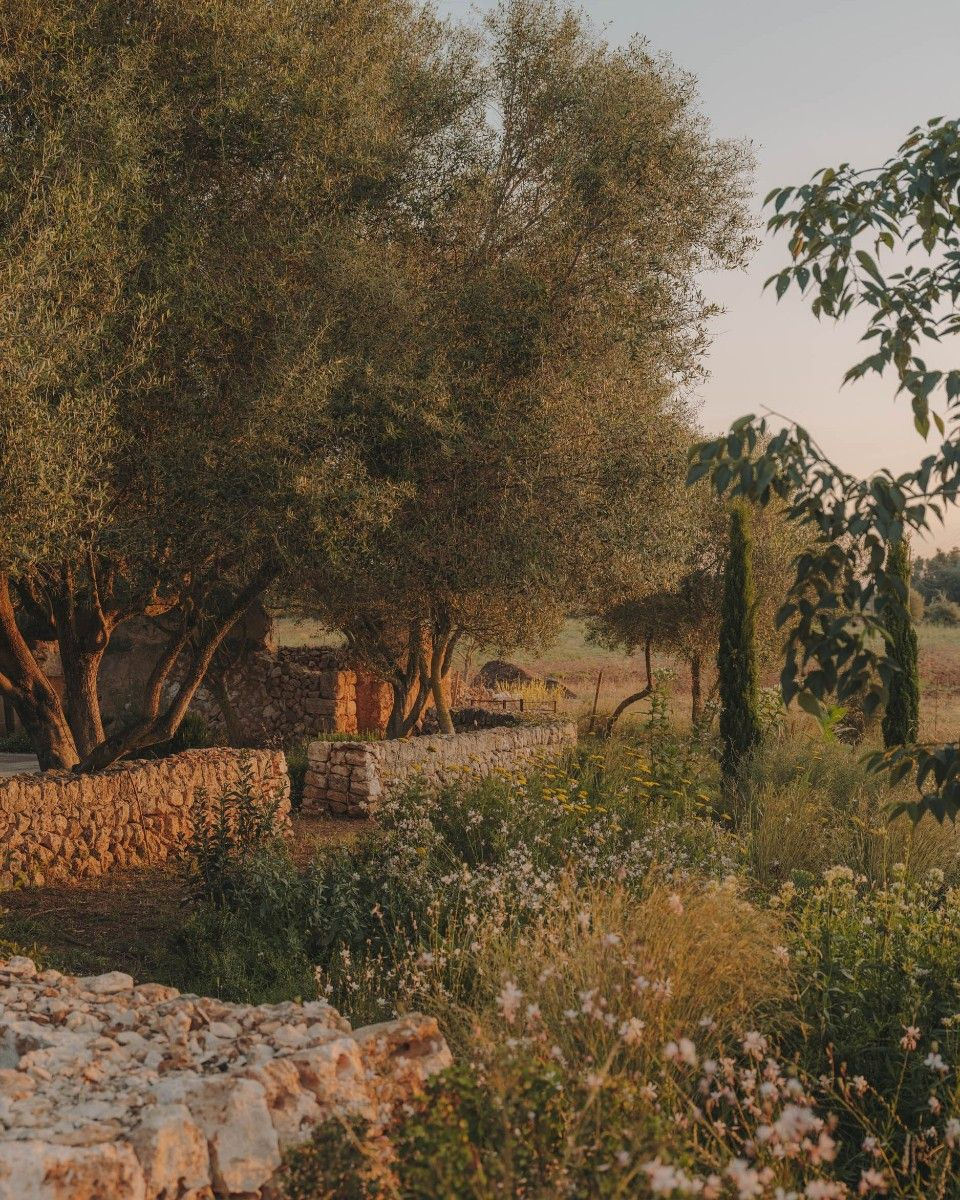
For Rawness, that means every property begins with its actual carrying capacity. We read exposure, soil, water, existing vegetation and microclimate before deciding what belongs. We protect soil cover, build organic matter and root systems, use measured irrigation and select crops and cultivars that justify the water, space and care they require.
We do not import a universal garden formula and place it on Ibiza.
We deepen our knowledge of one island, one property, one season and one cultivar at a time.
That accumulated knowledge matters. A cultivar that thrives in one sheltered finca may fail on an exposed coastal property. A tree that performs beautifully in deeper soil may ask too much of another site. The longer Rawness observes these differences, the more precisely we can design and steward landscapes that belong to their place.
Designed around the land. Stewarded around the kitchen. Revealed at the table.